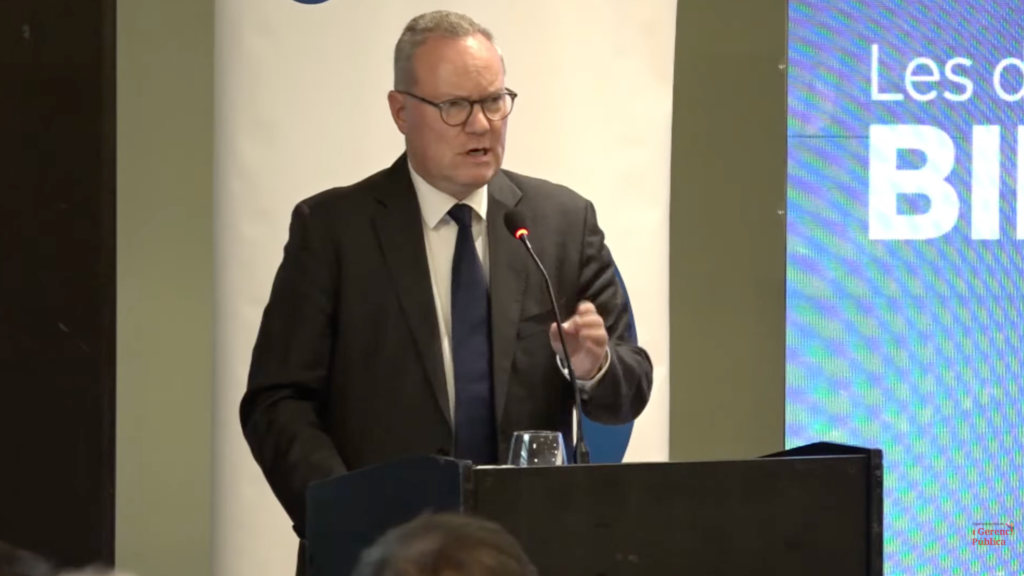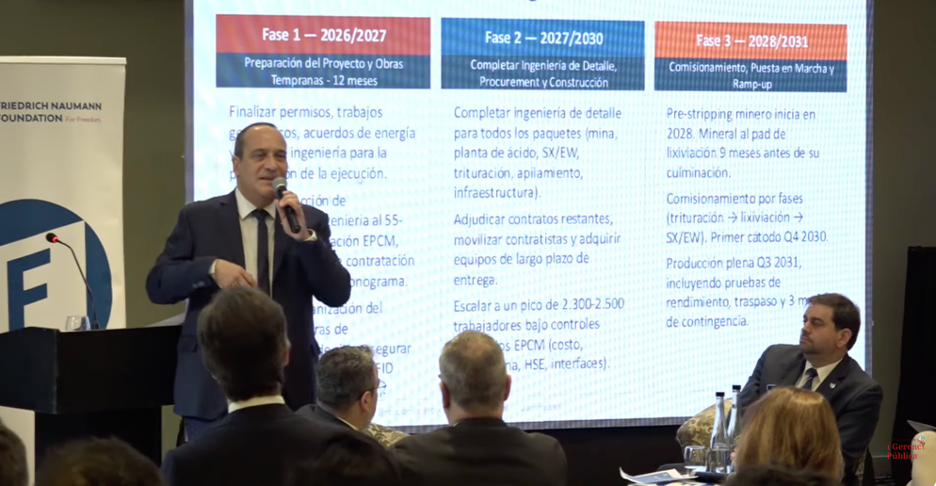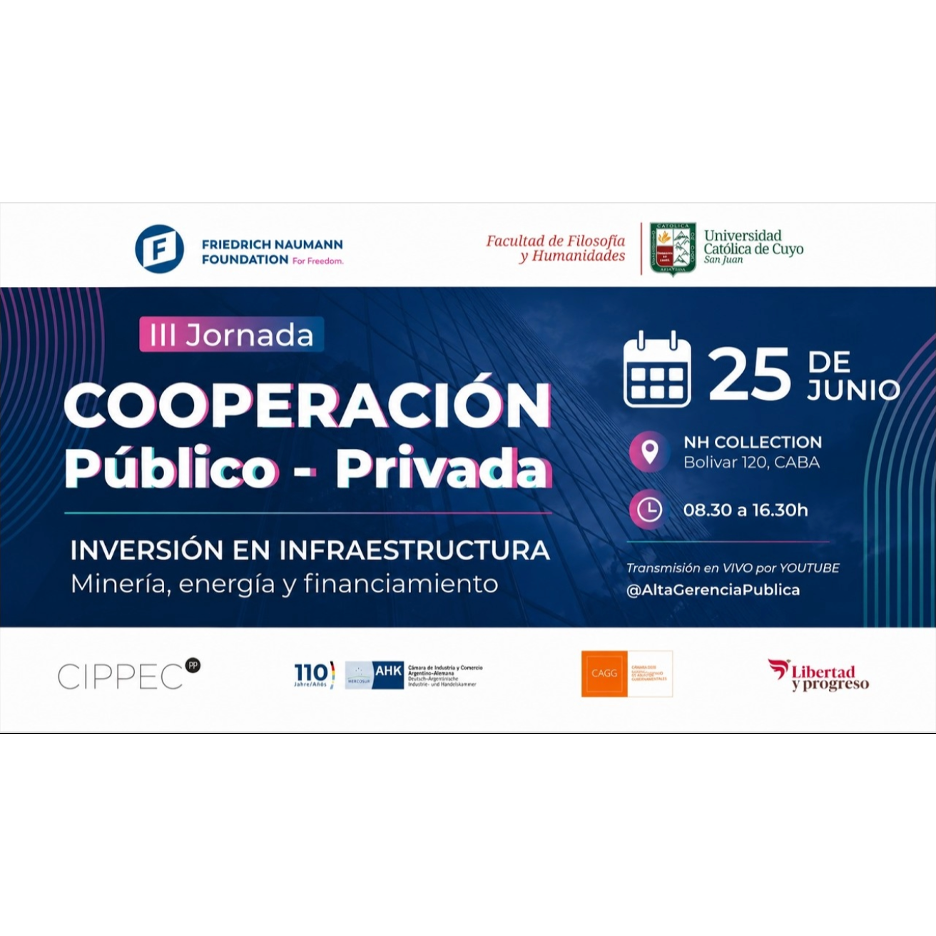

DelPlata Green was present at the III Conference “Public-Private Cooperation: Investment in Infrastructure, Mining, Energy and Financing”, organized by Friedrich Naumann Argentina and the Faculty of Philosophy and Humanities of the Catholic University of Cuyo.
It was a full day in Buenos Aires to discuss a central issue for Argentine development: how to convert the country's enormous potential in mining and energy into real, predictable and sustainable investment.
Three key areas for thinking about mining and energy development
Among the topics discussed during the day, three ideas stood out.
Legal certainty is infrastructure
Without regulatory predictability and stable rules, no large-scale mining or energy project can be sustainably financed.
Trust is the first thing that needs to be built. Before roads, energy, access, or plants, projects need a framework that allows for planning, investment, and execution with a long-term perspective.
Financing needs creativity
With four world-class mining projects advancing simultaneously, the challenge is not just attracting capital. It's also designing innovative mechanisms that make it viable, shared, and sustainable.
The scale of investment required by Argentine mining demands new forms of collaboration between companies, the State, financial institutions, and local stakeholders.
Public-private cooperation is built with leadership
The cases of Chile, Uruguay and other countries in the region show that the State and the private sector do not compete: they need each other.
The development of infrastructure, mining, and energy requires coordination, strategic vision, and leadership capable of organizing diverse interests around common goals.
The Blues: sustainability as a design decision
One of the cases presented during the day was the The Blues Project, in San Juan.
In the “San Juan Case” panel, Rodolfo Ovalles, Legal and Institutional Affairs Manager of Los Azules, presented data that illustrate a good practice for the sector: thinking of sustainability as a design decision, not as a final addition.
Developed by McEwen Copper, the project opted for heap leaching instead of conventional flotation. The numbers from the 2025 Feasibility Study, compared to the industry average, illustrate the impact of that decision:
- 73% less carbon intensity in ranges 1 and 2.
- 74% uses less water than conventional grinding.
- 48% less electricity demand.
- Without a tailings dam.
- Renewable energy, wind and hydropower.
- Carbon neutrality goal by 2038.
These data show that initial technical decisions can define much of a project's future environmental footprint.
Local roots and territorial value
Sustainability also has a territorial dimension. In the case of Los Azules, the data shared during the event shows a strong connection with local suppliers and employment.
Of the more than USD 83 million invested in the last 16 months, 701% went to suppliers. In turn, 681% of that expenditure remained in San Juan and Calingasta.
Currently, the project has 512 people working, with the vast majority of direct employment based in the province.
This point is central to thinking about mining with local roots, capable of generating value in the territory and strengthening its social license.
Sustainability is chosen before building
With the first cathode projected for the end of 2030, Los Azules is making the design decisions today that will define its future footprint.
That's the most important point: sustainability is chosen before building. It's not fixed afterward.
When a project incorporates environmental, social, and governance criteria from the outset, it can better measure its impacts, anticipate risks, organize information, and strengthen its position with investors, regulators, buyers, and communities.
We highlight this as a standard worth replicating: when sustainability is designed from the outset, it can be measured. And what is measurable becomes investable.
Measure to prove that it is done well
Argentina possesses strategic resources in mining and energy. The challenge, and also the opportunity, is to demonstrate with data that these resources can be developed in a responsible, traceable, and sustainable manner.
At DelPlata Green, we help mining, energy, and industrial companies measure and report their environmental impact, organize ESG information, and strengthen their sustainability processes with reliable data.
If your company It needs to measure its environmental footprint, advance in ESG reporting, or integrate sustainability criteria from the design stage of its projects., Contact us to learn about our solutions.