

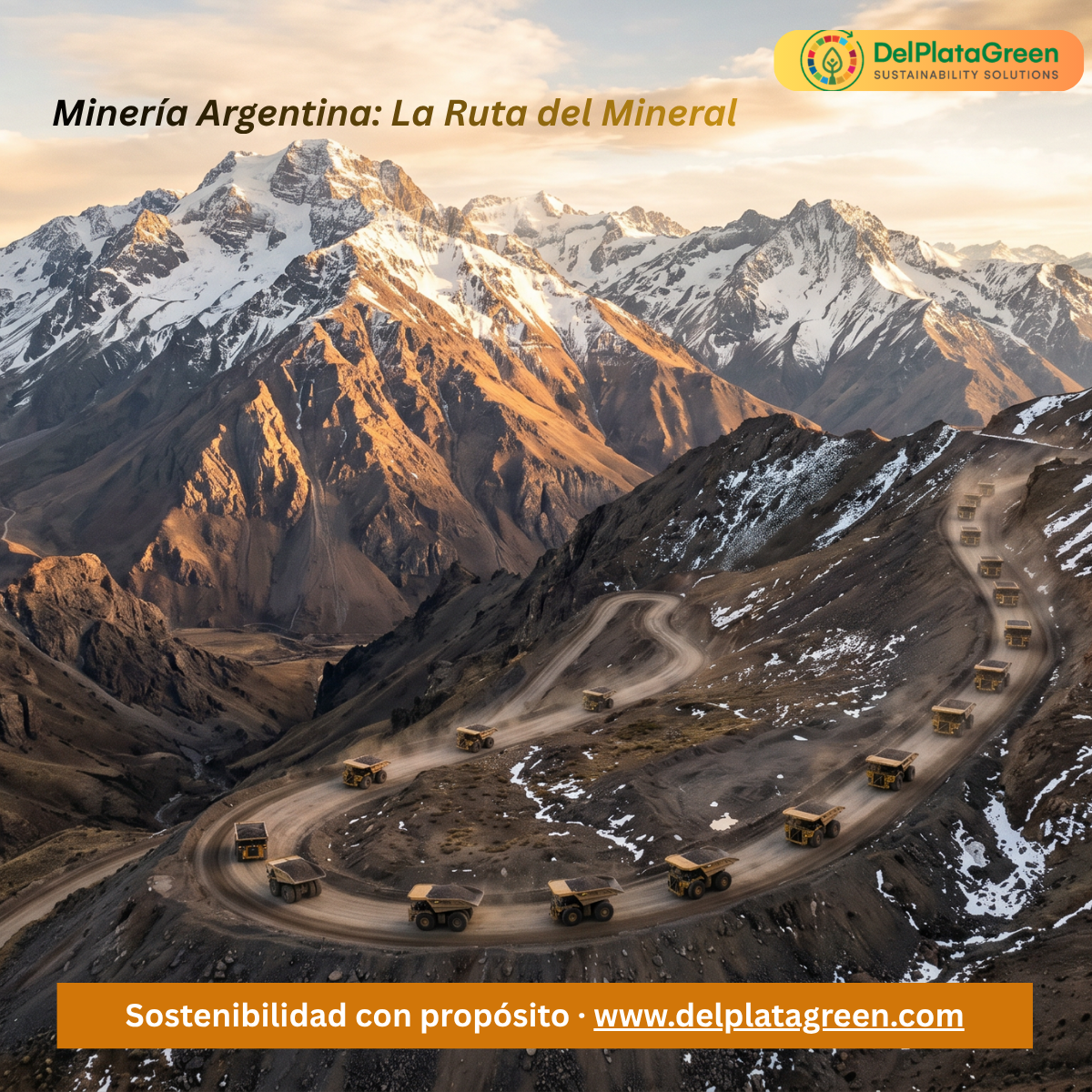
During Engineering Week dedicated to Argentine Mining, organized by the Argentine Center of Engineers, a key piece of information was shared to consider the future of the sector: The coordinated infrastructure planning among mining operators in Neuquén allowed for a 30% cost reduction.
In multi-billion dollar projects, that percentage represents hundreds of millions of dollars in savings.
How was it achieved?
The central point was coordination between operators in the area. A working group was formed to plan electrical, water and logistics infrastructure in an integrated manner, with a binding energy demand call.
These weren't general estimates. These were real commitments.
That approach allowed anticipate needs, organize investments, and prevent each project from resolving its infrastructure in isolation.. For Argentine mining, the message is clear: plan now and integrate all actors in the same region.
The logistical challenge is enormous
The growth of mining in Argentina demands solve infrastructure challenges increasingly complex. Key points include:
- Roads and access routes to sites in high mountain areas.
- Transport of minerals from the mountain range to the ports.
- Shared infrastructure among multiple simultaneous projects.
- Reducing the impact on communities by avoiding the transit of heavy machinery through inhabited areas.
These issues are not only operational. They are also part of the environmental, social, and governance agenda of each project.
Poorly planned logistics can increase costs, generate higher emissions, affect nearby communities, and hinder the environmental traceability of operations. Integrated logistics planning can improve efficiency, reduce impacts and strengthen ESG management.
The point that many companies are still not measuring: Scope 3
In this scenario, a central issue for Argentine mining emerges: Scope 3 emissions.
Transportation and logistics are part of the indirect emissions of the supply chain. They are more difficult to measure than direct operational emissions, but can have a very significant impact on a mining company's ESG report.
Measuring Scope 3 involves looking beyond what happens within the project itself. It means incorporating data from suppliers, transportation, inputs, contracted services, and other actors that are part of the value chain.
For an activity like mining, where distances are great, infrastructure is critical and logistics define a large part of the operation, this point becomes increasingly important.
Measuring Scope 3 today can be a competitive advantage
Companies that start measuring their Scope 3 emissions today will be better prepared to meet the demands of tomorrow.
Regulators, international buyers, investors and financial markets are moving towards greater levels of traceability, transparency and control over the environmental footprint of production chains.
In this context, having clear data on Scope 1, 2 and 3 emissions allows for the construction of more robust ESG reports, the identification of reduction opportunities and the anticipation of future commercial or regulatory requirements.
Infrastructure planning and emissions measurement are not separate issues. They are both part of the same agenda: developing a more efficient, more traceable mining industry that is better prepared to compete in international markets.
DelPlata Green: Emissions measurement and reporting for mining
At DelPlata Green We help mining companies measure and report their Scope 1, 2 and 3 emissions, integrating technology, data and ESG criteria to support sustainability, compliance and decision-making processes.
Through ZeroCarbonOne's technology, we support organizations that need to organize their environmental information, measure their carbon footprint, and move towards more complete and reliable ESG reports.
If your company needs measure emissions, report on environmental performance, or prepare for new market demands, contact us.